


PHAC · National Wastewater Surveillance

Canada COVID Wastewater Tracker

SARS-CoV-2 (covN2) viral signal from PHAC national wastewater surveillance · latest week · source health-infobase.canada.ca

National viral signal — weekly mean across sites

Site-level latest trend (covN2)

SiteProvinceLevelTrend
The Debrief · Six Chapters

What the chart is actually telling you

The numbers above reward a little context. Adam runs the debrief; Kirk asks the questions a normal person actually has; Spock answers them. Read along, or press play and let it scroll.

01

Why the sewer knows first

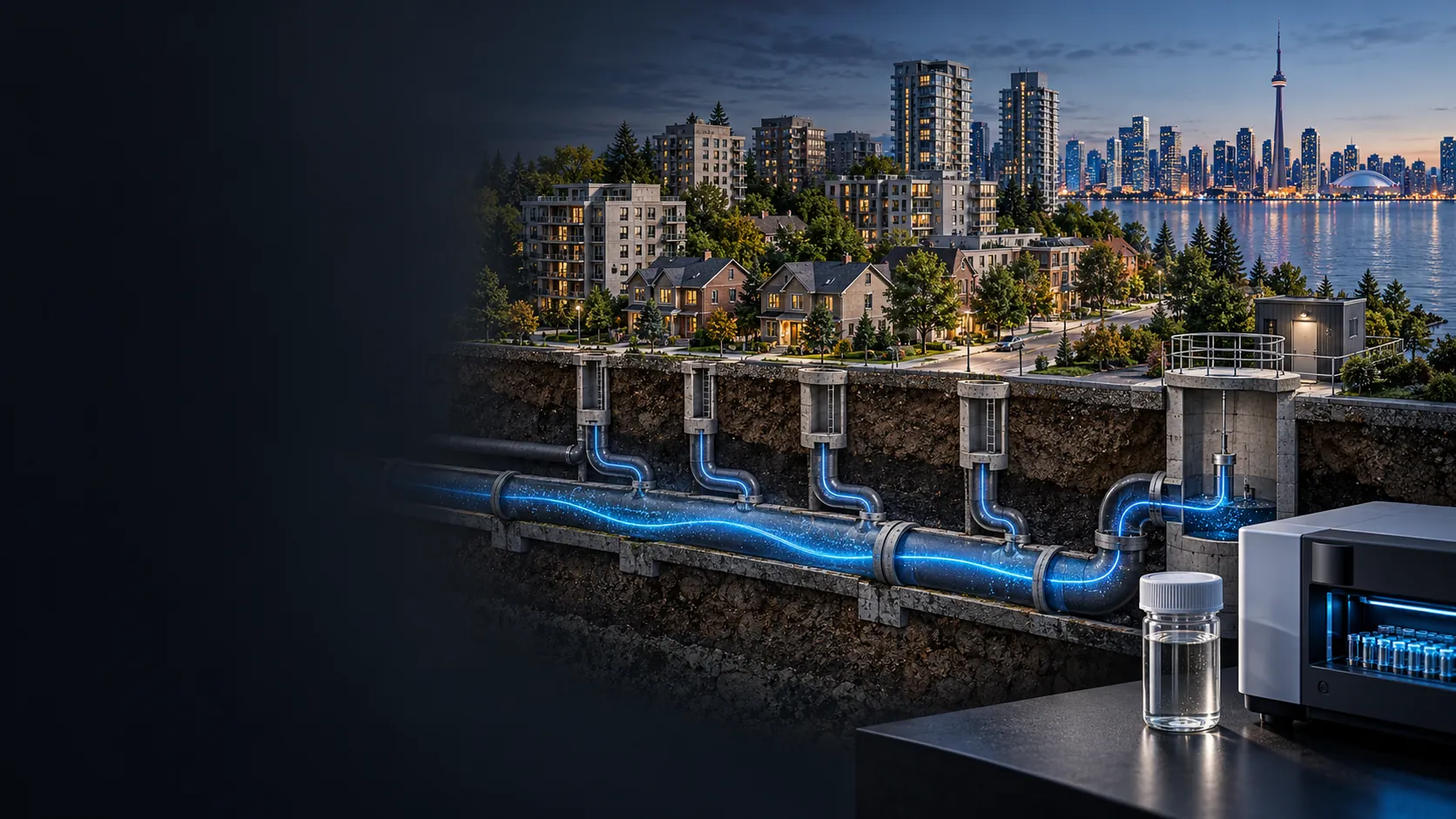
People infected with SARS-CoV-2 shed the virus's genetic material in their stool — often before symptoms, and whether or not they ever get tested. A treatment plant pools the waste of a whole city, so one sample is effectively a census of tens of thousands of people who never volunteered for one. Surveillance you can't opt out of, working in the public's favour.

02

Reading the signal

That value on the line is a normalized viral signal — a concentration corrected for how dilute the sewage is. It is not a case count, and it is not comparable between sites in absolute terms: plumbing, population and lab method all differ. The honest question is never "how high," but "rising or falling, here, versus last week." Read every line against itself.

03

The national curve

Three years in, a rhythm is unmistakable: peaks around each December–January, troughs by late spring. It isn't clean seasonality — new variants drove off-season bumps — but each winter's height has trended below the chaos of 2023 and early 2024. As of the latest week, the national signal sits near the floor of the whole series, single digits, and still declining.

04

Where it's circulating now

Down at the manhole, many sites read "non-detect" or "no recent data." Those mean different things: non-detect is real — the signal genuinely fell below the limit of detection this spring; no recent data just means a site reports less often, or paused. Absence of a number is not absence of virus. Across every reporting province the picture is low and steady to decreasing; no region is climbing.

05

It isn't only COVID

The same samples are screened for influenza A and B and RSV — one pipe, a multiplex panel, a near-complete read of the respiratory season. While COVID sits at the floor, flu A is low and falling, flu B is moderate, and RSV is moderate but decreasing. The whole respiratory season is winding down together: exactly the seasonal exit you'd expect.

06

What to do with this

Use it as a weather forecast, not a diagnosis. When your region's line turns up for two or three straight weeks, that's your early warning — mask in crowds, test before visiting someone fragile, time a booster. When it's at the floor, as now, ease off, informed rather than guessing. It leads clinical signals by roughly a week, and that week is the entire point.

Pass It On · Ten Tiles

Ten things worth knowing. Share one.

Wastewater is the cheapest early-warning system Canada has, and almost nobody reads it. Pick a tile, post it, put the sewer's forecast in front of someone who'd want a week's notice.

Trends and levels as reported by PHAC. "Viral signal" is a normalized concentration; values are not comparable across sites in absolute terms, only as relative trends. Province line = mean of that province's reporting sites; national line = mean of all sites. RSV/flu signals also present in source data.

Source: PHAC national wastewater surveillance · Narration: ElevenLabs V3 (Kirk × Spock × Adam) · Built for felineunion.org. Not medical advice.